Living with Loss: Grief, Love, and Creative HealingCONNOR AMOR-BENDALL
BOUNTIFULL PODCAST EPISODE 50 · · ·
Life After Trauma
Dr. Thea Comeau — psychologist, researcher, and Assistant Professor at Concordia University of Edmonton — joins Sian for a grounded conversation about post-traumatic growth, integration, and why there is no single “right” way to suffer, heal, or grow after trauma.
⏱ 1h 3m · 🎧 Audio + Video · ✦ Editor's pick
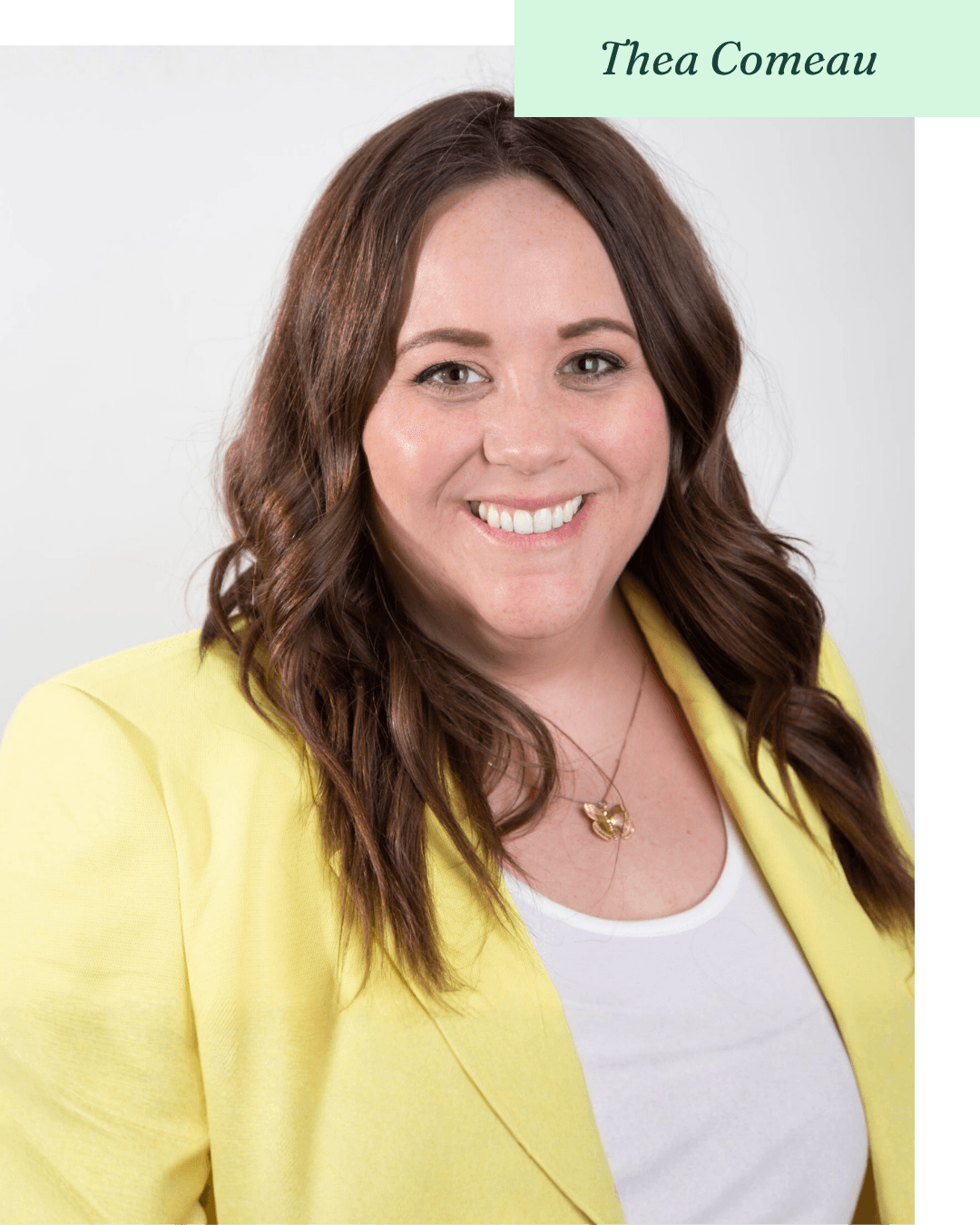
“Just surviving trauma is already a giant and fantastic thing to do.”
WATCH THE FULL CONVERSATION · · ·
Press play. Settle in.
THE BOUNTY - BY BOUNTIFULL
The questions, episodes and ideas worth treasuring. One nugget at a time.
ABOUT THIS EPISODE · · ·
The Third Path.
Dr. Thea Comeau is a psychologist, researcher, and Assistant Professor at Concordia University of Edmonton whose work explores trauma, healing, and post-traumatic growth.
Dr. Thea Comeau explores trauma, healing, and the many different ways people find their way through what has happened.
Trauma can change the way we see the world, ourselves, other people, and what we thought was safe or certain. It can leave people trying to survive minute by minute, without any clear map for what comes next.
In this conversation, Thea explores post-traumatic growth not as a neat redemption story, and not as something anyone should be expected to experience, but as one possible path after trauma. For some people, healing means finding their way back to who they were. For others, it means building something new.
She talks about why recovery is rarely linear, why “at least” statements often cause more harm than comfort, and why there is no right way to suffer or heal. Sometimes the most important thing is simply getting through the next few seconds, finding one small thing that makes the moment 1% more bearable.
Thea also explains the idea of titration: touching the painful thing in small, manageable ways, then stepping away. Healing does not have to mean diving all the way into the deepest part at once.
What she offers is not a promise that trauma will make you stronger. It is something more honest than that. Pain can remain. Grief can remain. And still, over time, people may find new values, new priorities, new relationships, or a different sense of what matters.
This is a conversation about post-traumatic growth, integration, and why there is no single right way to suffer, heal, or grow after trauma.
Reading about it is one thing.
Hearing her say it is another.
WHY THIS EPISODE MATTERS · · ·
What Can Come After Trauma
Trauma can leave us feeling as though life has been split into a before and an after. The world no longer feels as safe, predictable, or understandable as it once did.
This conversation matters because it offers a more humane alternative to the familiar cultural story that we must either move on or remain broken. Dr. Thea Comeau explains that healing is rarely neat or linear, and that growth is not something we are required to achieve. Sometimes surviving is enough.
What makes this conversation so valuable is the permission it offers. Permission to grieve. Permission to struggle. Permission to heal in your own time. And permission to believe that, when you are ready, something meaningful may still emerge from what you have lived through.
"There’s no wrong way to survive your trauma."
MEET THE GUEST · · ·
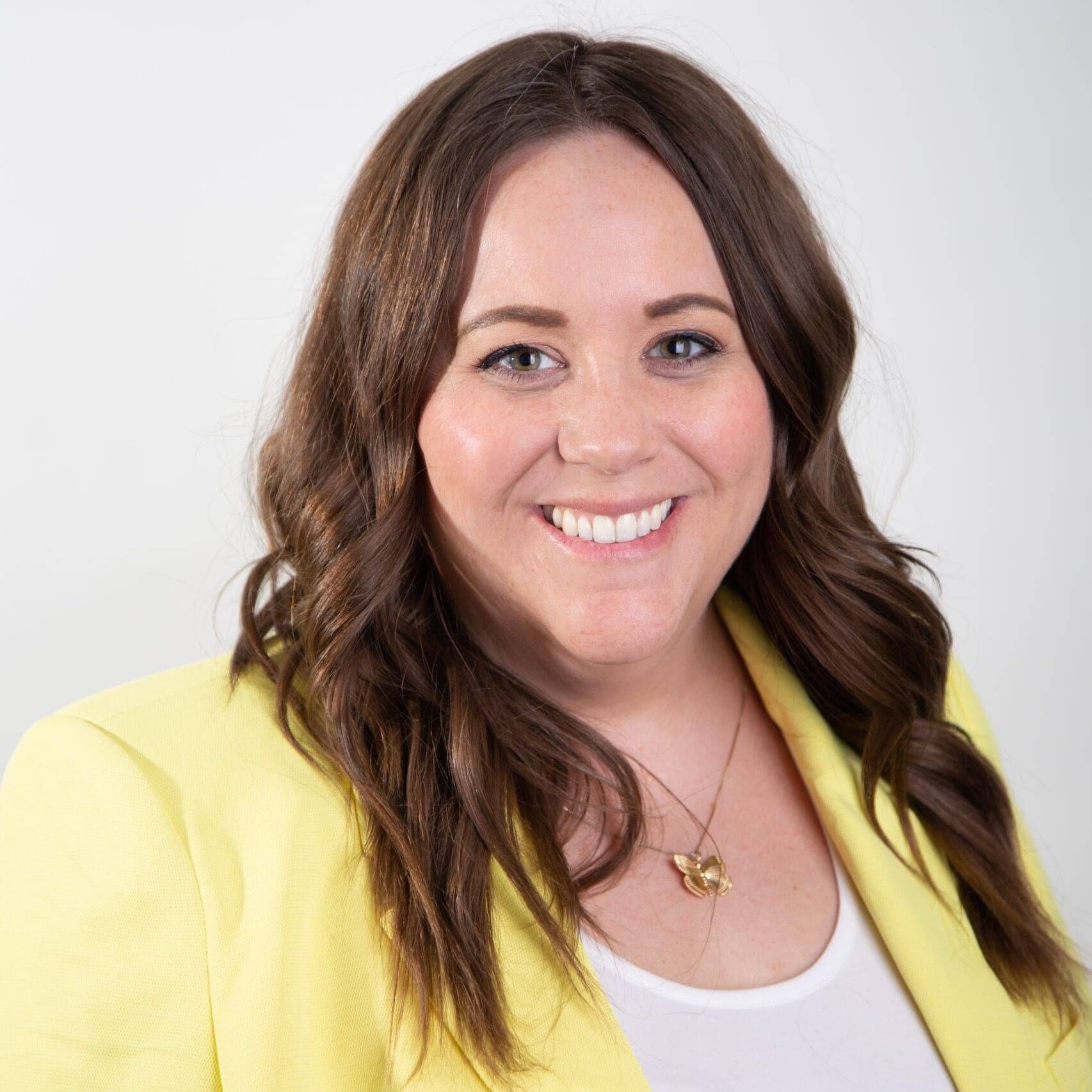
Dr Thea Comeau - Psychologist, Researcher.
Dr. Thea Comeau is a registered psychologist, researcher, and Assistant Professor at Concordia University of Edmonton, where she directs training for the PsyD in Clinical Psychology programme. Her work sits at the intersection of trauma, healing, and post-traumatic growth. Her doctoral research at McGill University took her to Northern Ireland, where she studied how personal values shifted among families who had lost loved ones during the conflict. Today, her research, teaching, and clinical practice continue to explore how people find their way through deeply painful experiences.
IN 60 SECONDS · · ·
Trauma is not “move on or stay broken.”
If you only have a minute, watch this. Dr. Thea Comeau challenges the narrow way we often talk about trauma, and offers a more human view: that pain, growth, struggle, and healing can all exist at the same time.
QUESTIONS + ANSWERS · · ·
The conversation, distilled.
Common questions, honest answers. Drawn from this episode and the ideas that stayed with us longest.
WHAT IS POST-TRAUMATIC GROWTH?
Post-traumatic growth is the possibility that trauma can become the engine for profound personal change. Not despite the suffering — because of it. It can show up in how you love people, how you relate to others, how you see yourself, or how you find meaning and contribute to the world. As Dr. Thea Comeau puts it, there is a potential for an opportunity inside the suffering that comes with trauma — and for some people, that becomes a genuinely helpful path forward.
What makes this idea different from the familiar "what doesn't kill you makes you stronger" narrative is its honesty about complexity. Growth doesn't arrive after the pain has lifted. It happens alongside it. Suffering and growth operate in parallel — not in opposition. And it is never the required outcome. Some people move through trauma and return to who they were before. That is equally valid. Just surviving, Thea says quietly, is already a giant and fantastic thing to do.
HOW DO PSYCHOLOGISTS DEFINE TRAUMA?
Trauma is a word that gets used in a lot of ways — sometimes clumsily, sometimes in ways that have diluted its meaning. But for people going through it, Thea is clear: only they know how devastating it was, how disruptive, how much the world turned on its axis. In the post-traumatic growth field, trauma is understood broadly as any experience that shatters the way you've made sense of the world. Before it happened, you had a kind of rulebook — a set of beliefs about safety, about the goodness of people, about your own capacity. Trauma is what makes that rulebook stop explaining the world you're now living in. Something happens, and the world cracks apart.
WHAT HELPS IN THE EARLY DAYS AFTER TRAUMA?
Thea's approach is disarmingly gentle. Rather than looking for something that will make the pain stop — which she describes as a kind of cruelty — she asks clients to find what makes them 1% more comfortable in the next few seconds. Is the sun on your face? Do you have your favourite sweatpants clean? Fresh sheets? These things seem impossibly small against the scale of suffering. But if they help you make it from one minute to the next, that's enough. Just surviving, she says, is already a heroic thing to do.
WHAT IS TITRATION, AND WHY DOES IT MATTER?
Titration is a term borrowed from chemistry. In trauma healing, it means taking only the amount you can cope with, sitting with it, and then stepping away. Thea describes it as processing a little — then getting the hell out of there, because it's awful. Thirty seconds of reflection followed by a whole day of distraction, if that's what you need. If you make it from morning to night, that's mission accomplished. The goal is never to go all the way into the deepest part at once.
WHAT ARE THE FIVE AREAS OF POST-TRAUMATIC GROWTH?
The framework developed by researchers Tedeschi and Calhoun identifies five: finding new possibilities — new paths, relationships, or directions; valuing relationships more deeply; a greater sense of personal strength; changes in spirituality or existential wellbeing, which Thea describes more broadly as living with purpose; and an appreciation for life that goes beyond the small things — an appreciation for being alive itself. Not all five will appear for every person. None of them are guaranteed.
WHY GROWTH IS NOT THE RIGHT OUTCOME — OR THE ONLY ONE
One of Thea's strongest convictions is that post-traumatic growth should never be positioned as the correct way to survive trauma. Early research produced striking numbers — suggesting that as many as 97% of survivors experience it — and while she doesn't discount those findings, she worries about what that framing implies: that if you haven't grown, you haven't finished. That you haven't healed properly. She trains her students to have an ear tuned for growth — to notice it when a client brings it, and gently reflect it back — but never to introduce it too early, and never to make it the expected destination. Lots of people find their way back to who they were before trauma, and that is just as valid. Just surviving, she says, is already a giant and fantastic thing to do.
WHY IS HEALING RARELY LINEAR?
Thea uses the image of a tornado — not a straight line upward, but a cyclical, ascending process that loops back around. You never lose the learning you've done, but it doesn't feel like steady progress. Ten years after an event can be harder than five. A birthday, a season, a song can bring things rushing back. What changes over time isn't necessarily the pain — it's what you have around it. More self-knowledge. More skills. More capacity to hold it.
WHAT IS THE DIFFERENCE BETWEEN POST-TRAUMATIC STRESS AND POST-TRAUMATIC GROWTH?
Post-traumatic stress — which includes but isn't limited to PTSD — describes the pain that comes from trauma. The nightmares, the hypervigilance, the weight of it. Post-traumatic growth is what can sometimes emerge because of that pain. Thea is careful to say they are not opposites. They are not in competition. She uses the image of cross-country skis — they operate in parallel, not against each other. Growth is not the absence of suffering. It happens alongside it.
WHY ARE "AT LEAST…" STATEMENTS SO HARMFUL?
This is one of Thea's strongest convictions, and she puts it plainly: there is no world in which an "at least" is helpful to someone in the midst of their heart cracking open. The impulse behind it — to make what someone went through feel smaller, more manageable — is fundamentally flawed. It doesn't soothe. It signals that you haven't understood. She says she's never seen it be helpful, and she drills this into her students. If she could put one memo out to the universe, she says, it would be to stop at least.
HOW DO YOU ACTUALLY SUPPORT SOMEONE WHO IS SUFFERING?
The most generous thing Thea offers here is permission to get out of the way. Your assessment of what the other person is going through is not what they need. Your opinion about how they're handling it hasn't been invited. If they want it, they'll ask. What they need is for you to care — genuinely, quietly, without making it about you. She also asks that we stop putting the labour of knowing what they need back onto people who may have no capacity for it. Don't ask "what do you need?" Offer something specific. Lasagna or spaghetti — that's a question someone in pain can usually answer. What would you like to eat tonight? That might not be.
WHAT DOES THEA'S RESEARCH IN NORTHERN IRELAND TELL US ABOUT GROWTH AFTER LOSS?
Thea spent years in Belfast speaking with families who had lost loved ones to the conflict — asking them, with real humility, how their values had changed for the better. Again and again, they told her that the values they held before the trauma were radically different from the ones they held after. Some moved from pleasure-focused values to more outward, community-oriented ones. Some found themselves more connected to people on the other side of the conflict than to people on their own side who hadn't experienced loss. And they asked her to make sure people knew: don't wipe out the pain to tell a prettier story. The growth and the grief existed together. Both were true.
WHAT DOES IT MEAN TO LIVE A BOUNTIFUL LIFE, ACCORDING TO DR. THEA COMEAU?
Thea describes it as a combination of intellectual stimulation, genuine connection, and what she calls squish time — unscheduled space that isn't packed with anything, where life can find you. She feels richest, she says, when she has room to breathe. Her three values — stay curious, be kind, be zesty — are simple and deeply her own. And she lives by a quiet mantra that feels especially right coming from someone who has spent her career sitting with other people's hardest moments: life's too short to mute yourself.
DOES WESTERN CULTURE GIVE US ENOUGH CHOICES FOR HOW TO SURVIVE TRAUMA?
Most of us have grown up with a binary: move on or stay broken. Thea finds this view deeply reductionist — and says so plainly. Post-traumatic growth offers what she calls a third path. Not grit your teeth and push forward, leaving part of yourself behind. Not curl up and stop. But something she describes as emergence — an "and now what?" that makes room for both the pain and the possibility at the same time. You can be in pain and still send a letter to a politician on a cause you care about. You can be in pain and still bake cookies for a friend. Both are true. Both can coexist.
WHY IS DISRUPTION ACTUALLY NECESSARY FOR GROWTH?
We don't change unless we have to. That's not a character flaw — it's just human. If life is ticking along, even imperfectly, there's no internal pressure to rebuild anything. Trauma is the thing that forces you back to the drawing board. It breaks open the beliefs and assumptions you'd been living inside without ever examining them — and that rupture, as painful as it is, is what creates the conditions for something different to emerge. Without the disruption, Thea says, you probably would have just continued. Which is fine. But the disruption is also where the opening is.
WHAT IS THE LEGO METAPHOR — AND WHY DOES IT HELP?
Thea uses Lego with her clients, and it's one of the most honest and useful ways of describing what post-traumatic growth actually looks like in practice. Trauma, she says, is like a boot that crushes your Lego castle. Blocks flying everywhere. What follows — the work of healing and potentially growing — is picking up each block individually, turning it over, and deciding what you want to do with it. Some blocks go straight back in. They're part of who you are — your values, your relationships, your beliefs. Others you might look at and realise you inherited them from someone else, or built them out of fear, and you don't actually want them back. Post-traumatic growth is that process of rebuilding — deliberately, honestly, and on your own terms.
WHAT ARE THE THREE STAGES OF TRAUMA RECOVERY?
Psychologist Judith Herman's model gives us a loose but genuinely useful framework: finding safety, processing the trauma, and finding a new normal. Thea uses it to help people understand where they are — and crucially, why certain tools work at certain stages and not others. If someone still doesn't feel safe in the world, encouraging them to think about growth or new possibilities isn't helpful — it's missing the boat entirely. Safety first. Then processing. Then, when the time is right, the question of what comes next.
WHAT IS WISDOM, AND HOW DOES IT RELATE TO TRAUMA?
Thea describes wisdom as a combination of humility and self-knowledge. Being the expert in yourself, she says, is a quietly powerful thing. And it aligns closely with what often comes out of trauma — most people who have been through something genuinely hard know themselves a little better than they did before. They are aware of both their strength and their fragility. They tend to balk at being called wise. That, Thea suggests with a smile, is usually the tell.
KEEP LISTENING · · ·
More bountiful conversations.
What Depression Teaches Us About Brain Health, Gratitude, and HealingDR. KRISTIN FRANCIS
Why Social Connection Is Essential to a Bountiful LifeJULIANNE HOLT-LUNSTAD