Defiance, Compliance, Saying No and the Psychology of ApprovalDR SUNITA SAH
BOUNTIFULL PODCAST EPISODE 54 · · ·
In Praise of Slow: Why a Good Life Cannot Be Rushed
Carl Honoré — bestselling author, two-time TED speaker, and the man who convinced millions to stop glorifying busyness — joins Sian to explore the radical idea that slowing down might be the most ambitious thing you can do with your life.
⏱ 1h 6m · 🎧 Audio + Video · ✦ Editor's pick
"Speed is kryptonite for love, memory and meaning."
WATCH THE FULL CONVERSATION · · ·
Press play. Settle in.
THE BOUNTY - BY BOUNTIFULL
The questions, episodes and ideas worth treasuring. One nugget at a time.
ABOUT THIS EPISODE · · ·
The Examined Life.
Carl Honoré is the author of In Praise of Slow, a two-time TED speaker, and one of the world's leading voices on the slow living movement.
Carl Honoré believes we have become far too good at rushing through our own lives.
We rush through work, parenting, meals, rest, relationships, and even pleasure, often telling ourselves that doing more means living more. But the faster we move, the less life seems to stay with us. Days blur. Conversations disappear. Memories don’t quite land. We tick the box and move on.
Carl’s own wake-up call came while reading bedtime stories to his son. What should have been one of the slowest, most tender moments of the day had become another task to get through. He was skipping lines, turning multiple pages at once, and trying to speed-read his way to the end. It made him realise he was not just rushing through a story. He was rushing through his life.
What Carl offers is not a fantasy of abandoning everything, moving to the mountains, and growing carrots. Slow living is much simpler, and much more useful than that. It is about finding the right pace for the moment. Some things can be done quickly. Other things, like love, listening, creativity, rest, and meaning, need time.
He talks about how clocks, capitalism, technology, and the belief that “time is money” have shaped the way we live. But underneath all that busyness, he suggests there is often something deeper going on. Sometimes speed is a way of avoiding ourselves.
The antidote is practical. Walk without distraction. Keep a journal. Make a “not to do” list. Practise saying no. Turn off notifications. Cover the clock. Do one thing at a time. Give each moment the attention it deserves.
Slow living is not about being lazy or opting out of life. It is about being present enough to actually live it.
Reading about it is one thing.
Hearing him say it is another.
WHY THIS EPISODE MATTERS · · ·
Busyness
is not a life
We live in an age that rewards speed, busyness, and doing more. Carl Honoré has spent twenty years making the case for the opposite.
This conversation matters because it gives language to something most of us feel but rarely name: that the life we actually want — rich with memory, connection, creativity, and meaning — cannot be built at full speed. Slowing down isn't a retreat. It's the most ambitious thing you can do.
"If you leave this episode asking what you're really rushing towards, Carl's work is done."
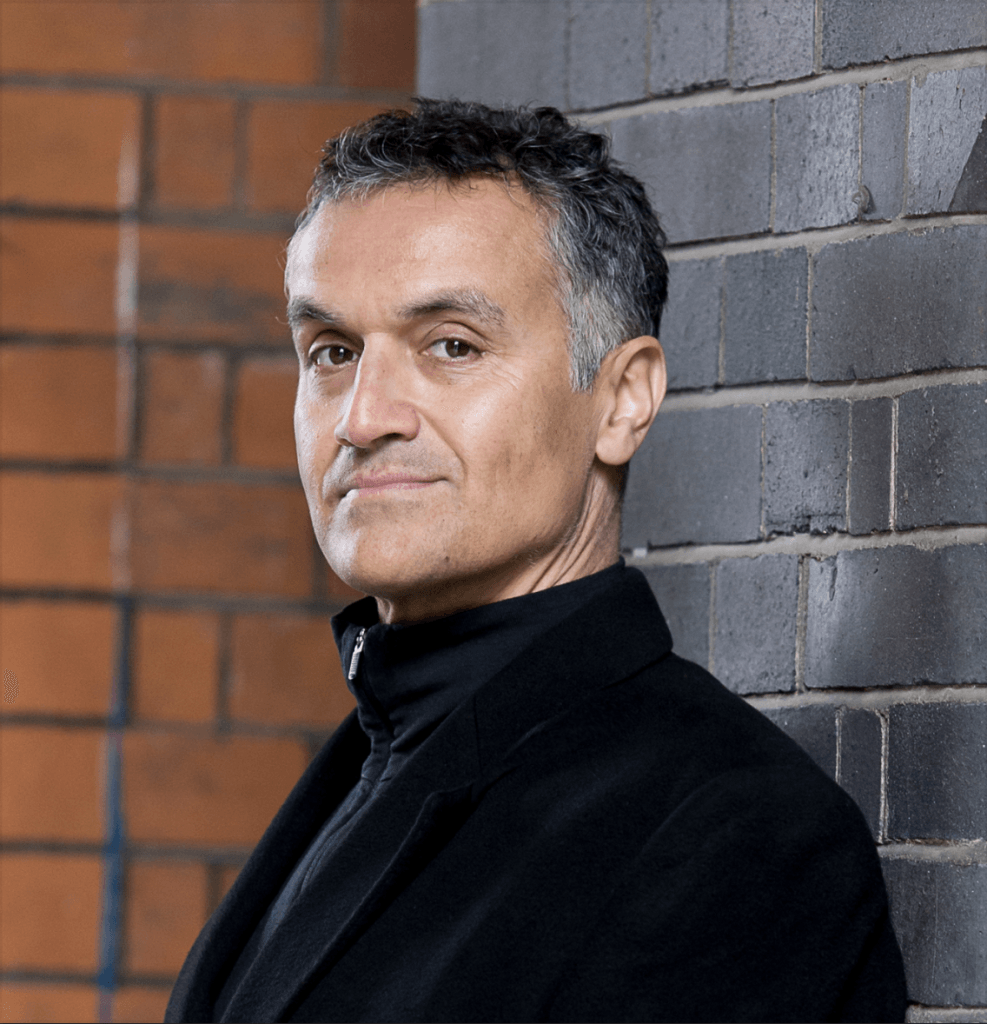
MEET THE GUEST · · ·
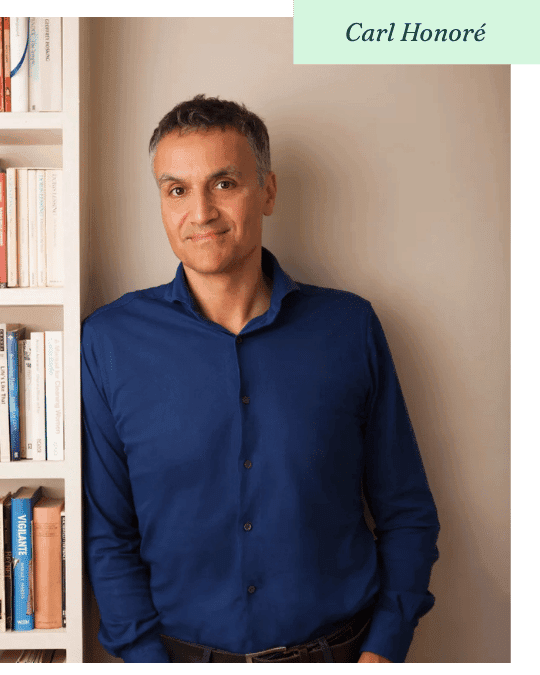
Carl Honoré -
Author, Journalist, Slow Movement Pioneer.
Carl Honoré is a bestselling author, broadcaster, and two-time TED speaker, widely regarded as the voice of the Slow Movement. His first book, In Praise of Slow, has been published in 36 languages, and the Financial Times described it as “to the Slow Movement what Das Kapital is to communism.” He has since written five more books, including The Slow Fix, Bolder, and Under Pressure. His online keynotes have racked up more than 10 million views. Carl lives in London.
IN 60 SECONDS · · ·
The stage of life you're living right now is worth dancing in.
If you only have a minute, watch this. It's Carl's pushback on one of the most common lies we tell ourselves — that you grind now and slow down later. Every stage, he says, has its own rhythm worth finding.
QUESTIONS + ANSWERS · · ·
The conversation, distilled.
Common questions, honest answers. Drawn from this episode and the ideas that stayed with us longest.
WHAT IS SLOW LIVING, AND WHAT DOES IT MEAN IN PRACTICE?
Slow living is a mindset, not a pace. It's about doing things at what musicians call the tempo giusto — the right speed for each activity. The core practice is asking, for any given moment, not "how do I get through this as fast as possible?" but "how do I do this as well as possible?" In practice, that means doing one thing at a time, being fully present, and giving each task the attention it deserves.
WHY ARE WE SO OBSESSED WITH SPEED AND BUSYNESS?
The obsession has multiple roots: the invention of the clock made time measurable and therefore tradeable; capitalism reframed time as money; and technology has put a constant source of stimulation in our hands. But Carl Honoré argues there's also a psychological driver — for many people, a fast, busy life is a form of denial. It's easier to keep rushing than to sit with larger questions about who we are and how we're living.
WHAT DOES SPEED DO TO MEMORY?
When every moment is a race, nothing sticks. The Czech writer Milan Kundera identified the intimate bond between slowness and memory: when we slow down, experiences leave an imprint. When we live in Roadrunner mode, we tick boxes and forget them hours later. Carl describes how, once he slowed down, he began carrying what felt like an internal journal — rich, textured memories — because he'd finally been fully present for his own life.
WHAT ARE THE PRACTICAL FIRST STEPS TO SLOWING DOWN?
Carl recommends three tools:
(1) Walking — without music or a podcast, with a single open question to sit with.
(2) Journalling — writing down the insights that walking surfaces before they're forgotten.
(3) A not-to-do list — each day, identify one thing from your to-do list you can drop. Keep those discarded items in a list. Revisit them two weeks later — you'll almost always find you haven't thought about them since. This builds the habit of recognising what actually matters.
HOW DO YOU SLOW DOWN WITHOUT HURTING YOUR CAREER?
Slow doesn't mean unproductive — it means strategic about when to be fast and when to be slow. In most workplaces, the approach is to run small experiments: suggest the team leaves when work is done rather than being last out, or try two hours without notifications. Debrief at the end. The Economist concluded that mastering the clock of business is about knowing when to be fast, but crucially also when to be slow — less mistakes, better focus, stronger innovation.
IS SLOW LIVING ONLY FOR WEALTHY OR PRIVILEGED PEOPLE?
No. Slow is fundamentally a mindset available to anyone. Community gardens in food deserts, cooking a meal from scratch, going for a walk without headphones — these are acts of slow that cost nothing. Carl acknowledges that money makes many things easier, but argues it doesn't preclude anyone from slowing down. The slow movement is driven as much by people with limited means as by those with abundance.
HOW DOES SPEED AFFECT OUR RELATIONSHIPS AND INTIMACY?
You cannot accelerate love, friendship, or deep connection — they have a natural arc that hasn't sped up regardless of cultural pressure. Loneliness (increasingly an epidemic across all age groups) is now understood to be as harmful to physical health as smoking fifteen cigarettes a day. In the bedroom specifically, Carl argues that speed culture has turned intimacy into a performance metric — something to be timed and optimised — rather than an act of presence and connection.
WHAT IS THE "STACKING" RITUAL AND WHAT DOES IT SAY ABOUT SLOW LIVING?
Stacking is a ritual emerging among young people: when a group sits down together for coffee or a meal, everyone puts their phones in a pile in the centre of the table. Whoever reaches for their phone first pays the bill for the whole table. Carl sees it as a spontaneous cultural expression of slow — an acknowledgement that this moment together is worth protecting, and that trying to be in multiple moments at once ruins the one you're actually in.
WHAT IS "TEMPO GIUSTO" AND HOW DOES IT APPLY TO EVERYDAY LIFE?
Tempo giusto is a musical term meaning the correct or natural tempo for a piece of music. Carl uses it as the central metaphor for the slow philosophy: each activity, relationship, or moment has its own right speed. Slow living isn't about doing everything slowly — it's about having the awareness to choose the right speed for each situation, rather than defaulting to maximum pace out of habit or anxiety.
HOW DO YOU BEGIN BREAKING THE TABOO AROUND REST AND PLEASURE?
Carl recommends baby steps. Allow yourself a small moment of genuine pleasure — a proper meal, a long bath, an unhurried conversation. Then reflect on how it felt. The cultural taboo against slowness frames rest as laziness and enjoyment as indulgence, but once you move past that barrier, the experience itself becomes the argument. As Mae West put it: anything worth doing is worth doing slowly.
WHAT IS THE CONNECTION BETWEEN SLOWING DOWN AND LIVING A MEANINGFUL LIFE?
Meaning requires presence. When we're moving too fast, experiences don't leave an imprint — we tick boxes and move on. Carl Honoré argues that a meaningful life is built from moments we actually inhabit, not ones we race through. Slowing down isn't about doing less — it's about being fully there for what you're doing, which is the foundation of a life that feels rich and purposeful rather than just busy.
HOW DOES SLOW LIVING RELATE TO PERSONAL GROWTH AND SELF-AWARENESS?
Real personal growth requires what Carl calls "metaphysical homework" — the uncomfortable but essential work of asking who you are, what you stand for, and whether you're living the right life. Speed is often a way of avoiding those questions. Slowing down — through walking, journalling, or simply sitting with discomfort — is what creates the conditions for genuine self-awareness and intentional change.
CAN SLOWING DOWN ACTUALLY IMPROVE YOUR WELLBEING?
Yes, and the research is clear. Chronic speed takes a measurable toll on physical health, mental health, creativity, and relationships. Loneliness — accelerated by a culture that prioritises productivity over connection — is now understood to be as harmful as smoking fifteen cigarettes a day. Slowing down isn't a lifestyle luxury; it's a biological necessity for sustained wellbeing.
WHAT DOES IT MEAN TO LIVE A BOUNTIFUL LIFE?
Carl Honoré describes it simply: waking up in the morning and thinking "yes, another day." Not dreading the schedule, not performing busyness for other people — but genuinely looking forward to what the day holds. A bountiful life is one lived at the right pace, with space for pleasure, connection, creativity, and reflection. It's less about having more, and more about being fully present for what you already have.
WHAT IS THE RELATIONSHIP BETWEEN JOY AND SLOWNESS?
Joy — real, lasting joy, not just stimulation — requires slowness to take root. The deepest human pleasures, food, relationships, creativity, rest, empathy, all have a natural pace that can't be rushed without losing what makes them valuable. Carl argues that slowness isn't a sacrifice — it's actually the access point to the most meaningful pleasures life offers.
KEEP LISTENING · · ·
More bountiful conversations.
The Art of Being: Creativity, Connection, and the Rich Tapestry of LifeSIR RICHARD TAYLOR