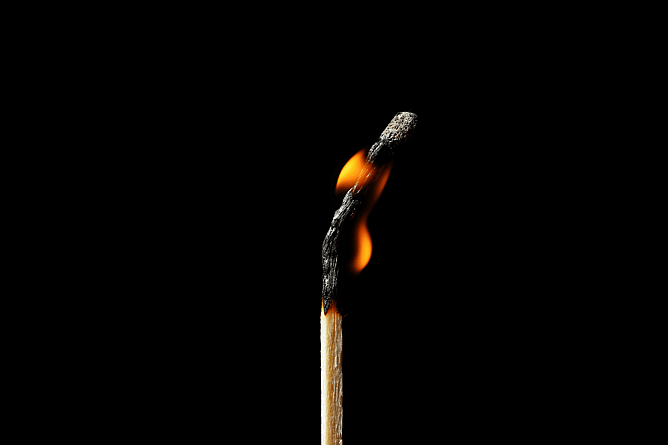
Burnout has a branding problem.
We've turned it into a productivity issue. A self-care failure. Something to fix with better boundaries, more sleep, a holiday, a new morning routine. We treat it like a scheduling problem with a wellness solution. Take the weekend off. Download the app. Book the retreat. Take the mini sabbatical.
But none of that touches the real thing. Because for a lot of people, burnout isn't about doing too much. It's about doing the wrong things for too long. Things that were never really theirs to carry.
That's a harder truth to sit with.
It means that exhaustion isn't always a sign you need to slow down. Sometimes it's a sign you've been running in the wrong direction. That the role, the goal, the identity you've been pouring yourself into was shaped more by expectation than by anything that actually feels like you.
You can be working incredibly hard and still be running on empty, because effort directed away from your true self doesn't sustain you. It drains you. Quietly, steadily, completely.
We absorb other people's definitions of success before we've had time to develop our own. We take on the ambitions our families had for us, the metrics our industries reward, the version of a good life that looked appealing at 25 and somehow became a cage by 35. We should ourselves into corners. And then we wonder why we're exhausted.
Burnout, in this light, isn't a breakdown. It's a signal. A reckoning. Your system telling you, loudly and without apology, that something is misaligned.
The question worth asking, not when you're in the thick of it but before, or after, is which kind of burnout this is. Was it the pace? The volume? Or was it something quieter: a values mismatch, a role that never quite fit, a purpose that belonged to someone else?
Because the recovery looks different depending on the answer.
If it was the pace, rest helps. If it was misalignment, rest just delays the moment of reckoning. You come back to the same life and wonder why you still feel hollow.
Real recovery, the kind that actually sticks, requires getting honest about what you're for. Not in a grand, cosmic sense. In a practical one. What lights you up? What drains you flat? What are you doing when time disappears? What have you been tolerating so long you've stopped noticing it costs you?
Those questions aren't soft. They're the most important work you can do.
Because when you're living in genuine alignment, when what you do connects to who you actually are, something shifts. Energy starts to return. Not because life gets easier, but because the effort means something. It's pointed somewhere real.
Burnout stops being inevitable when purpose stops being borrowed.
This piece was inspired by a conversation on the Bountifull Podcast with Nell Derick Debevoise, speaker, coach, and author, who has spent over a decade helping people find purpose that's actionable, aligned, and authentically theirs.
Listen to the full episode here or wherever you get your podcasts.