What Nature Teaches Us About Living a Good LifeDR HOLLI-ANNE PASSMORE
BOUNTIFULL PODCAST EPISODE 60 · · ·
How to Build a More Adaptable
Nervous System
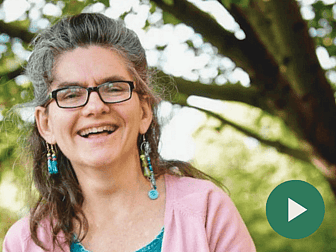
Dr Aarti Soorya, integrative medicine physician, nervous system practitioner, and the doctor who discovered that doing everything “right” still wasn’t enough, joins Sian Simpson on the Bountifull Podcast to explore what happens when the body stops letting us push through. This is a conversation about building an adaptable nervous system, learning to feel safe in your own physiology, and understanding the body’s symptoms as messages rather than problems to fight.
⏱ 1h 3m · 🎧 Audio + Video · ✦ Top Ten

"Our behaviors and our health are dependent on the state of the nervous system. We are wired for safety and threat, and your body is always sensing your environment. If we are tuned in, we can listen to these clues to tell us how to navigate life."
WATCH THE FULL CONVERSATION · · ·
Press play. Settle in.
THE BOUNTY - BY BOUNTIFULL
The questions, episodes and ideas worth treasuring. One nugget at a time.
ABOUT THIS EPISODE · · ·
The
Adaptable
Life.
Dr Aarti Soorya is an integrative medicine physician whose work explores nervous system health, stress, rest, Yoga Nidra and what it means to build adaptability in the body.
Dr Aarti Soorya believes many of us are not broken. Our bodies are trying to get our attention.
We push through stress, poor sleep, anxiety, fatigue, brain fog, gut issues, low mood and the vague sense that something is not quite right, often telling ourselves we just need to be more disciplined, more positive, more resilient. But at some point, the body starts speaking louder. The symptom arrives. The sleep disappears. The energy goes. The thing we thought we could keep pushing through starts pushing back.
Aarti’s own wake-up call came when she was doing everything “right”. She was a doctor, had been chief resident, trained in functional medicine, and was following the kinds of protocols the wellness world often gives us. Labs, supplements, meditation, exercise, all the things. But she still had major insomnia. She was exhausted. And slowly she realised the missing piece was not another test or another supplement. It was her nervous system.
What Aarti offers is not another life overhaul. In fact, she is quite clear that trying to change everything at once can be too much for a nervous system already running on survival. Her work is about building adaptability. Can you move through stress and come back to safety? Can you feel what is happening in your body without becoming afraid of it? Can you stop treating every symptom as an enemy and start asking what it might be trying to tell you?
She explains the nervous system in plain English: the vagus nerve, cortisol, fight, flight, freeze and fawn, functional freeze, and why stress itself is not always the problem. The problem is when we cannot recover. A resilient nervous system is not one that avoids stress altogether. It is one that can meet life, feel what is happening, and come back.
The tools are practical. Yoga Nidra. Walking. Breath. Posture. Cold exposure, used carefully. Blood sugar stability. Rest. Dance. Play. Creativity. Connection. Small things, done with awareness, not as another way to push harder.
This is a conversation about learning to stop fighting the body and start listening to it. Because sometimes the symptom is not the problem. Sometimes it is the message.
Reading about it is one thing.
Hearing her say it is another.
WHY THIS EPISODE MATTERS · · ·
Pushing
through
is not the answer
We live in a culture that rewards pushing through. We call it discipline, ambition, resilience, even wellness. But Dr Aarti Soorya makes a different case: if the body never feels safe enough to recover, pushing through can become another form of nervous system dysregulation.
This conversation matters because it gives language to symptoms many people live with but struggle to connect: insomnia, fatigue, anxiety, low mood, gut issues, brain fog, people-pleasing and shutdown. Aarti explains that stress itself is not always the problem. The question is whether your nervous system can move through stress and come back to safety.
Building an adaptable nervous system is not about overhauling your whole life. It can begin with awareness, rest, breath, movement, Yoga Nidra, play, connection and the small decision to listen to what your body is trying to tell you.
"If you leave this episode seeing your nervous system as something to listen to, not fight, Aarti’s message has made a difference."

MEET THE GUEST · · ·
Dr Aarti Soorya -
Integrative Medicine Physician, Nervous System Specialist, Yoga Nidra Guide.
Dr Aarti Soorya is an integrative medicine practitioner and physician whose work brings together conventional medicine, functional medicine, lifestyle interventions, nutrition, neuroplasticity, and Yoga Nidra. She is board certified in Physical Medicine and Rehabilitation, a Diplomate of the American Board of Obesity Medicine, and has completed functional medicine training.
Through Jiya Health, Dr Soorya helps people understand the nervous system, build physiological resilience, and use practices like Yoga Nidra, nervous system mapping, and lifestyle changes to support long-term health and adaptability.
🎧 LISTEN · · ·
Subscribe on your favourite platform.
QUESTIONS + ANSWERS · · ·
The conversation, distilled.
Common questions, honest answers. Drawn from this episode and the ideas that stayed with us longest.
WHAT IS THE NERVOUS SYSTEM, IN PLAIN ENGLISH?
The nervous system is the control centre for everything — how we think, feel, respond, relate, and heal. At its most basic, it is wired to ask one question continuously: am I safe, or am I not safe? Much of this happens below conscious awareness. It's the operating system running quietly in the background of your life, shaped significantly by your earliest experiences, and influencing everything from your energy levels and digestion to your moods, relationships, and sleep. Dr Aarti Soorya describes it simply: the state of your nervous system is the state of your health.
WHAT IS NERVOUS SYSTEM DYSREGULATION?
Dysregulation is what happens when the nervous system gets stuck — either in a high-alert state it can't come down from, or in a shutdown state it can't come back up from. In a well-functioning system, you move through stress and then recover. In a dysregulated system, that recovery doesn't fully happen. You might be functioning on the outside — getting up, going to work, doing the things — but there's no real ease in it. Symptoms like chronic fatigue, anxiety, gut issues, low mood, brain fog, insomnia, and people-pleasing can all be signs that the nervous system has been running in survival mode for too long. None of these are character flaws. They are adaptations.
WHAT ARE THE SIGNS THAT YOUR NERVOUS SYSTEM IS DYSREGULATED?
Some signs are obvious — persistent anxiety, anger, feeling on edge, panic attacks, or being unable to wind down. But Aarti highlights several that are easy to miss. Feeling numb, watching your life like a movie rather than living it, dragging through the day without joy or real engagement — these can also be signs of nervous system dysregulation, specifically what she calls functional freeze. So can being excessively chill — the person who never seems ruffled by anything, because they've disconnected from their own physiology rather than genuinely found ease. Low mood, vague fatigue, digestive issues, and hormonal imbalances can all be part of the picture too.
WHAT IS FUNCTIONAL FREEZE — AND ARE YOU LIVING IN IT?
Functional freeze is Aarti's term for a state she believes much of modern culture is living in. You can function — you get up, you do the things, you hold it together. But there's no real oomph in it. No joy, no sense of actually being in your life. It's the feeling of going through the motions, of being present but not really there. Aarti distinguishes this from fight or flight, which tends to feel more like urgency or overwhelm. Functional freeze is quieter, more like a low hum of disconnection that can be very easy to normalise — especially when the world around you is doing the same thing.
WHAT ARE THE FOUR STRESS RESPONSES — FIGHT, FLIGHT, FREEZE, AND FAWN?
These are the nervous system's four primary protective responses to perceived threat. Fight is the activation state — anger, anxiety, readiness to defend. Flight is the urge to escape — avoiding, ghosting, running from things that feel too threatening. Freeze is the shutdown response — overwhelm so complete that the system stops, conserves energy, disconnects. And fawn — the one Aarti says often goes unrecognised — is the people-pleasing response. The overly agreeable, always-taking-care-of-others mode that looks very functional but is actually a form of disconnecting from your own experience to create a sense of safety. All four are intelligent survival adaptations. The challenge is when they become the default rather than the response to an actual threat.
WHAT IS THE VAGUS NERVE AND WHY DOES IT MATTER?
The vagus nerve is the main communication highway between the brain and the body — and most people picture it as a one-way road carrying messages down from the brain. But 80% of the information actually travels upward, from the body to the brain. The body is constantly sending signals, and if we're tuned in, those signals can guide us. The vagus nerve innervates most of your major organs — your heart, lungs, throat, and the entire digestive tract — which is why nervous system states affect all of these systems, and why working with the body (rather than just the mind) is so central to Aarti's approach.
WHAT IS THE DIFFERENCE BETWEEN STRESS MANAGEMENT AND ADAPTABILITY?
This is one of the most important distinctions in the episode. Stress management — deep breaths, a bath, a glass of wine, a meditation app — gives temporary relief. It manages the dysregulation without changing your underlying capacity. Adaptability is something different. It's building the ability to move through stress and return to recovery — not just cope with the feeling, but expand your window of tolerance so that your nervous system doesn't jump from zero to overwhelmed quite so fast. Aarti is deliberate about this word. She doesn't want to teach people to manage stress. She wants to help them become less frightened of their own physiology.
WHAT IS CORTISOL — AND IS IT ACTUALLY BAD FOR YOU?
Cortisol gets a bad reputation, and Aarti wants to set the record straight. Cortisol is not the enemy. It wakes you up in the morning. It mobilises your body in the face of a challenge. Stress itself — in the right dose, followed by recovery — makes you stronger. The problem is sustained cortisol with no recovery. When the nervous system stays in fight or flight, the body has to prioritise that above everything else. Blood flow gets diverted away from digestion, reproduction, immune function, and lymphatic clearance. Over time, this is where chronic symptoms come from — not from cortisol itself, but from cortisol without a brake.
WHAT IS YOGA NIDRA — AND HOW DID IT HELP AARTI RECOVER FROM INSOMNIA AND BURNOUT?
Yoga nidra translates as yogic sleep — but it's a conscious sleep. Guided and accessible, it uses breath and body awareness to walk you through the deep stages of rest while you remain awake. For someone whose nervous system is dysregulated, more effortful practices — like watching your thoughts in meditation — can actually create more overwhelm. Yoga nidra sidesteps this. You lie down, you're supported, you're guided, and the mind is taken out of the equation. Aarti describes it as a non-doing practice — which is exactly why it was what her depleted system needed most. She eventually practised it twice a day, and alongside dance, it was what brought her back.
WHY DOES AARTI SAY YOUR SYMPTOMS MIGHT NOT BE THE PROBLEM — THEY MIGHT BE THE MESSAGE?
Insomnia in particular comes up here. When Aarti was going through her own, she kept asking what's wrong with me — when actually her body was doing exactly what a body under perceived threat is supposed to do. It's not safe to sleep when there's danger. Rather than fighting symptoms or trying to override them, she now invites a different question: what is this telling me? Approaching a symptom with curiosity rather than fear changes the relationship you have with your own body — and that shift in itself begins to create the sense of safety the nervous system is looking for.
HOW DO YOU START HEALING YOUR NERVOUS SYSTEM WITHOUT OVERHAULING YOUR LIFE?
Start smaller than you think you need to. This is one of Aarti's most consistent messages. When the nervous system is overwhelmed, large sweeping changes — a complete diet overhaul, a new supplement protocol, a demanding meditation practice — can actually add to the load rather than reduce it. The smaller the change, the more likely the nervous system is to tolerate it, integrate it, and build from it. Five minutes of yoga nidra. A ten-step walk. A moment of stillness with your morning coffee. These aren't inadequate. For a system that's been in survival mode, they are the right place to begin.
WHAT IS TITRATION, AND HOW DOES IT APPLY TO THE NERVOUS SYSTEM?
In chemistry, titration is the careful addition of a substance in small, controlled amounts. Aarti applies the same principle to nervous system work. Rather than going all the way into a difficult feeling or a challenging practice, you dip in for a short time — five seconds, thirty seconds — and then return to something that feels safe. Your nose. A neutral sensation in the body. A familiar anchor. Then you go back. Then return. Over time, this gently expands your capacity to be with difficult experiences without being overwhelmed by them. The goal is not to avoid stress. It is to be able to move through it and come back.
WHY DOES JOY MATTER FOR NERVOUS SYSTEM HEALTH — AND IS PLAY ACTUALLY MEDICINE?
Yes — physiologically. Joy, play, music, dance, creativity, and genuine connection all engage what's called the ventral vagal state — the part of the nervous system associated with safety, recovery, and resilience. This is the state where repair happens. For Aarti — who spent years in the serious, achievement-oriented world of medicine — allowing herself to play, and particularly to dance, felt almost dangerous at first. Am I going to fail at life if I go and play? But it was the thing, more than almost anything else, that began to shift her physiology. Joy is not a reward for when things are going well. It is part of how the system heals.
HOW DOES YOUR BREATHING AFFECT YOUR NERVOUS SYSTEM?
More than most people realise — and most people aren't breathing as well as they think. The diaphragm is a 360-degree muscle, meaning the breath should expand in all directions: front, sides, and back. Most people have been cued only to breathe into the belly, which misses much of the diaphragm's capacity. Posture matters enormously here too — a compressed, rounded posture physically restricts how much the diaphragm can move, which affects how the breath signals the nervous system. Aarti now considers posture and breath as foundational tools, often before anything more complex.
WHAT DO EPIGENETICS HAVE TO DO WITH YOUR NERVOUS SYSTEM AND YOUR HEALTH?
More than we've been led to believe. For a long time, genetics felt like destiny — the genes you inherited determined what your health would look like. But epigenetics — the science of what switches genes on or off — tells a different story. Your lifestyle, your sleep, your diet, your nervous system state: all of these influence gene expression. Aarti finds this genuinely hopeful rather than overwhelming. It means that the choices you make every day are not small. They are directly involved in how your biology unfolds. You have more agency over your health than the old model of genetics ever suggested.
WHAT DOES IT MEAN TO LIVE A BOUNTIFUL LIFE ACCORDING TO DR AARTI SOORYA?
Adaptability. Not because life gets easier, but because when you're adaptable, you can move through the hard moments as well as the good ones — and still find something worth having in each of them. Her advice to her 25-year-old self is a line worth sitting with: bring joy into your life, consciously, every day. For her that looks like quiet mornings with coffee, dance, and yoga nidra. Simple. Deliberate. Grounded in the body she spent years learning to stop fighting and start listening to.
WHY CAN'T I RELAX NO MATTER WHAT I TRY?
If you've tried all the things — the meditation apps, the exercise, the supplements, the sleep hygiene protocols — and still can't seem to wind down, it may not be because you're doing them wrong. It may be because a nervous system in survival mode can experience even well-intentioned wellness practices as another demand to perform. Aarti discovered this in her own recovery. She was doing everything right, and it wasn't working. The functional medicine protocols, the labs, the supplements — they were adding to the load rather than reducing it.
She's particularly direct about two things. First, high intensity exercise when you're already in a dysregulated state can actually exacerbate the problem. If cortisol is already elevated, adding a hard workout pushes the system further rather than bringing it back. Second, forcing yourself to meditate when your nervous system is overwhelmed can create more distress, not less. The instruction to watch your thoughts is genuinely hard when your system doesn't feel safe — and the effort of trying to do it correctly can become its own stressor.
The shift Aarti invites is away from doing more, and toward doing less — but doing it consciously. Not numbing out, not pushing through, but gently being with what's there. That, she says, is what actually begins to build safety in the system.
WHY AM I ALWAYS STUCK IN FIGHT OR FLIGHT?
If it feels like your body is permanently braced for something, even when nothing is actually wrong, you're not imagining it — and you're not broken. What's happening is that the nervous system's natural recovery mechanism has stopped working properly. In a healthy system, you move through stress and then come back down. The ventral vagal brake, as Aarti calls it, re-engages and brings you back to a state of ease. But when stress has been chronic enough, for long enough, that brake stops engaging reliably. Now things that shouldn't trigger a stress response do. Small things feel large. The system is running hot because it no longer trusts that it's safe to stop.
What makes this particularly hard to recognise is that it can feel completely normal. If you've been in fight or flight for years, that state becomes your baseline. You adapt to it. You function. You might even be high-achieving inside it — because the driven, push-through energy of a sympathetic nervous system can look a lot like success from the outside. Aarti lived this for years as a physician, chief resident, and high performer who was quietly burning through her reserves.
The way out isn't to fight the state or force yourself to calm down. It's to slowly, gently build the capacity to feel safe in your own body again — through small practices, through awareness, through rest, and through allowing joy back in. Not as a reward. As medicine.
WHAT CAN HELP ME HEAL MY INSOMNIA?
If you've tried every sleep hygiene tip and still can't sleep, Aarti's perspective might reframe the whole thing. Insomnia, she says, is not a malfunction. It is your nervous system doing exactly what it's supposed to do. If your body perceives threat — even low-level, chronic, modern-life threat — it is not going to let you sleep. Sleep requires safety. And no amount of magnesium, blue light glasses, or a consistent bedtime will override a nervous system that doesn't feel safe enough to let go.
This was Aarti's own experience. She was doing everything right and still not sleeping — because the root wasn't her sleep habits, it was the state of her nervous system. The job she was in wasn't right for her, and her body knew it before she fully did.
What actually helped her was yoga nidra — practised twice a day, not as a sleep aid but as a way of rebuilding depleted reserves and gradually teaching her system that rest was safe. Alongside that, dance. Joy. Movement that felt good rather than effortful. Slowly
KEEP LISTENING · · ·
More bountiful conversations.

Why Stress Matters: How to Thrive, Not Just SurviveDR PAULA WILLIAMS